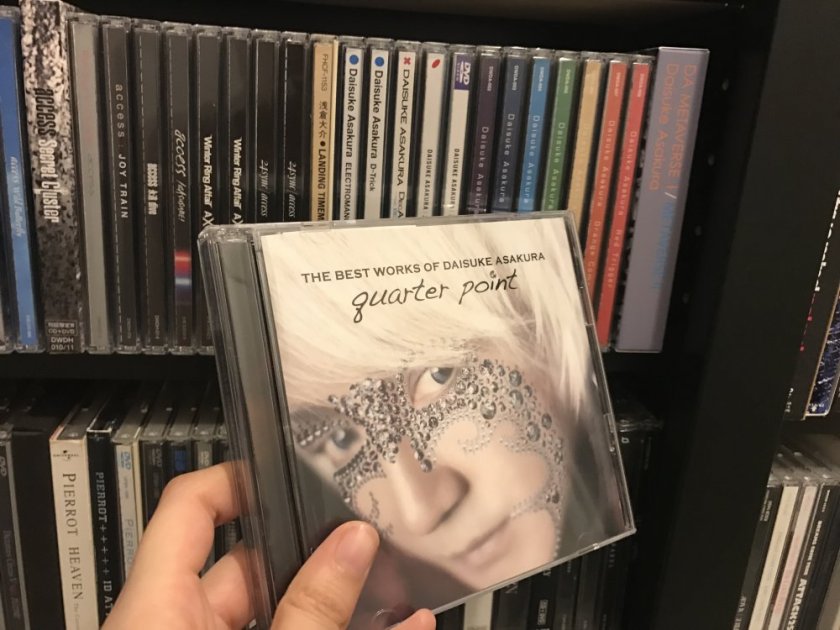
From my point of view, the best compilation album ever released and the most carefully prepared with the intention to create an impact and a statement. Today I will talk about Daisuke Asakura’s masterpiece compilation album “The Best Works of Daisuke Asakura Quarter Point” released in September 28 of 2016, just the year before celebrating his 25th year anniversary as a solo artist.
The album features 2 discs with 30 songs ranging from Asakura’s solo works, to iconic songs from his units (access and ICEMAN), songs composed for other artists he has produced throughout his career and a new song composed exclusively for this album, making this not only a compilation of his works, but it can also be considered as a compilation of Japanese music history and his contributions to it, which is a big deal.
Considering that Asakura probably has more than 750 songs in his catalogue, it must have been an extremely difficult feat to choose these specific songs that were relevant enough to make it to the album, so let’s begin the review and analysis of what each song represents and why they became the “chosen ones” for this exclusive compilation.
The songs are prepared in a chronological order, where the first album includes songs from 1993 until 2004 and the second disc takes off from 2004 until 2016.
Let’s start with the disc 1, and the best way to begin the journey throughout this album was to open with ultra mega iconic song “THE ELECTROMANCER (Kanashimi no Kawa wo Yorokobi no Okawo)” from his 3rd solo Album “ELECTROMANCER” released in 1995, and from where people start to refer to Asakura as “The Electromancer” and with very good reasons to do so, since he is considered the master of synthesizers and this song is a great instrumental song where he shows the extend of his ability. From his solo works, we also have the song “techno Beethoven” song from his 2002 album 21st Fortune which is a recreation of Beethoven’s famous songs into electronic style, setting the stage for Asakura’s direction in his solo work, where he likes to have a blend of classical and electronic together. The last solo song included is “Meme crack – Haruka Kanata no Major E-” which is part of his concept solo project, the “Quantum Mechanics Rainbow” featuring 7 albums representing the colors of the rainbow, this song is included in the first album of this series and it was the first song using his vocals since the previous album in 2002, the song displays a combination of DJ type music remixing, with the addition of vocals and electronic oriented sounds.
Asakura’s most precious and current unit band access, formed with vocalist Hiroyuki Takami, we have the flagship song “MOONSHINE DANCE” this is probably their most known song that encompasses their early 90’s style which was inspired by TM Network’s sound and it’s their second best selling single after “DRASTIC MERMAID“, I guess the reason the latter was not included is because it’s part of a trilogy of songs and you can’t simply put just one, it would have been incorrect to do so. The second access song included in this album is “EDGE“, a song that represents access reunion in 2002 after their split, and it was the highest selling single from that era, this song clearly shows the new approach that Asakura wanted for access, transforming his sound to a more melodic progressive electronic style.
From the other relevant unit in his career: ICEMAN, formed with Michihiro Kuroda as vocalist and Asakura’s good friend Kenichi Ito on guitars, we have 3 songs released between 1998 and 1999, probably this was an easy one because “Shining Collection” was their most famous song and it was featured in the Gravitation anime, then we have “LOST COMPLEX” which was the last single released by them in 1998 before the split, and finally we have “Genetic Bomb” which was included in their last album release in 1999 “GATE // white”, this song was not a single, so I suspect Asakura has a sentimental attachment to it because this is the first ICEMAN song he performed in a solo concert by himself, which was in the Cultivate Meme ~About Quantum Mechanics Rainbow~ concert, and he sung all the segments of the song, so it must be very precious to him, and to me, it’s my personal favorite ICEMAN song, this song also represents the experimental direction ICEMAN was going through at the time, which moved completely away from rock and it was the rumored reason of why they disbanded in 2003, due to the creative differences of the members.
It was to be expected that we encounter a song with Takanori Nishikawa (TM Revolution) in this compilation, who is probably the most important artist that Asakura has ever produced, and the choice was done well, since we have “BLACK OR WHITE?”, this song was first released in the “ELECTROMANCER” album where Nishikawa was just an invited singer at the time, and Asakura happened to discover his great talent, leading them to start working together, this song was later re-released under TM Revolution as his debut single in 1995, so it is a very important song that marked the beginning of this troubled artist-producer relationship.
Then we have the songs made for artists that Asakura has collaborated with, one of the most important ones is the 1996 collaboration with Takashi Utsunomiya, who is also the vocalist of TM Network, or more accurate and like Asakura himself said in his D-Trick album, the “the super vocalist who is very respectable”, and whom Asakura considers a close friend and “big brother”, in 1996 Utsunomiya stopped his T.UTU with the band activities and wanted to focus on his personal brand as a real solo artist, this is when the album “easy attraction” was released, featuring 6 songs composed by Asakura, one of them being “KILL WILL KILL ME” included in this album, this is the first time that Asakura composed songs for Utsonomiya, therefore he composed more song for Utsunomiya in some of his later albums, but this marked the beginning of this great partnership that later included touring together as the TM Network tribute band from 2005 until 2009.
Another relevant collaboration was with the famous Japanese comedian Fuji Takashi, Asakura was responsible for his debut as a singer, and the song included “Nanda Kanda” was his debut single.
And finally we have a compilation of songs from the artists that Asakura has produced and composed for, this includes “LOVE&JOY” by Yuki Kimura, although my favorite song from their collaboration of 11 singles and 3 albums was “Twinkle Heart, the chosen song was their highest ranking song reaching 24 position in Oricon charts and was featured in Dance Dance Revolution games too. We also have Akiko Hinagata’s debut single and short venture into the music world with her career of just 6 singles produced by Asakura, and of course we have her debut single here: “Egao No Yokan”, she then retired as a singer and became a famous actress featured in many movies and doramas today.
And last but not least, we have one of the earliest collaborations Asakura made with a theater all female group of 18 members, their name was Minami Aoyama Shojo Kagekidan and the featured song is “Sweet & Toughness”, they disbanded in 2001 but this song was very successful and helped boost Asakura’s reputation as a reliable composer.
Now onto the world of the second disc, we start strongly with another one of Asakura’s classic instrumental pieces, this time with “Quantum Mechanics Rainbow IV”, probably the most compelling of the 7 volumes available.
Since access is the most important unit in Asakura’s career, of course we have more songs and that includes the 2 anime songs that helped them boost their popularity again after their 2002 reunion, the songs are both from 2007, the first one is “Hitomi no Tsubasa” featured as the ending song of the popular anime series Code Geass: Lelouch of the Rebellion, and the second one is “Doubt & Trust” probably the most “rockish” access song ever released and it was the opening theme of the anime D.Gray-man, the final access song we have is “Vertical Innocence” released in 2014, the reason why this song is here is to show the final musical form of access after the transformation they’ve gone throughout the years, now completely becoming an EDM unit, we have a lot of effects into this song making it a great option for live remixing which Asakura is very into recently.
There are other relevant collaborations included in this second disc, such as “SCARLET BALLET” together with the famous Jpop singer May’n , this song was also the opening theme of the anime series Aria the Scarlet Ammo and it reached 10th place in Oricon charts; then we have the song “Gyakkou x Raisan” performed by Tokyo Performance Doll, this is another female idol band originally formed in 1990 with 7 girls who graduated, a method that was used later by famous idols groups of nowadays like AKB48, however they stopped activities in 1996 and were reformed in 2013 with new members, this is when this song came in 2016 as the only collaboration they’ve done with Asakura, and bringing great results by reaching 2nd rank in Oricon charts.
The last collaboration included in this second disc is probably the most important one in my opinion and it’s with the greatest Akina Nakamori, also known as the eternal idol rival of Seiko Matsuda, Nakamori always showed a more “rebel” image than the “perfect” Matsuda, both reigned the golden era of Idols in Japan during the 80’s, and of course the collaboration with Asakura was a big success, the name of the song is “Rojo -Tierra-” and it was used as her comeback song to participate in the NHK Kohaku Utagoe festival, after having no releases since 2010, this song was released in 2014 bringing great joy to her fans with this refreshing techno and Spanish inspired sounds blended together with Nakamori’s legendary and mysterious voice, ranking 8th position in Oricon charts.
The rest of the songs are obviously from Asakura’s second concept project called “DA Metaverse”, where Asakura aimed to release 100 songs in 1000 days, starting in 2008, with 30 singles released digitally and later bundled into a double album launched in 2013. Followed by a second season with 8 iTunes digital releases from 2014 until 2016. From these songs, Asakura selected 3 songs from each season.
Now let’s talk about these songs, from the 1st season we have 2 songs with vocals, one of them is “Dream Ape Metaverse” which can be considered Metaverse’s main theme, so it was an obvious choice , then we have “YaTa-raven Chronicle”, the most epic song ever in my opinion, the beautiful lyrics about the legend of the raven with steel wings was another clear choice, and no wonder Asakura closes the Metaverse concert with this song, that’s how important it is. The third song is the instrumental song “Soushutsu“, probably the song with the best synth solos, it brings a lot of layers of music, and lots of complexity, it is way to show what Metaverse is all about, it’s about mastery, going beyond music onto a different universe where sound defies logic. Then from the second season we have a contrast with 2 instrumental songs, one of them is the emblematic “march hare”, don’t we all think of marching bunnies when we listen to this song? well yes, Asakura does too for sure, this song encompasses the union of classical piano play and techno electronica sounds, so it is a big statement as it shows Asakura’s trademark of bringing these two worlds together whenever he has the chance. The second instrumental song we have is “3×10^8 LUCKS” this is a very important song for Asakura, since he was inspired by the return mission of the Japanese Hayabusa rocket when he composed this song, thus it was a fact this song will be chosen, and lastly we have a vocal song “0 game”, this is perhaps the most iconic song from the 2nd Metaverse season, it conveys a great message to humanity, it tells us how we all start from scratch (from zero) and there is nothing to lose, so there is no reason not to take risks and start to form and create things.
Closing this beautiful masterpiece compilation, we have a new song only available in this release, the song is called “First Quarter moon~ Jougen no tsuki“, bringing us a lot of usage of the famous Moog Modular System and showing us the wonders of it.
In summary, the verdict is that this is a perfect compilation, that was prepared with extreme attention to detail, making sure that each song included was because it represented a very important milestone in Asakura’s extensive musical career, each song commemorates relevant moments in his career and in Japan music history. I highly recommend anyone who loves Japanese Music to buy this album, you won’t be disappointed!
Please support Daisuke Asakura and purchase online via CD Japan Web Store:

